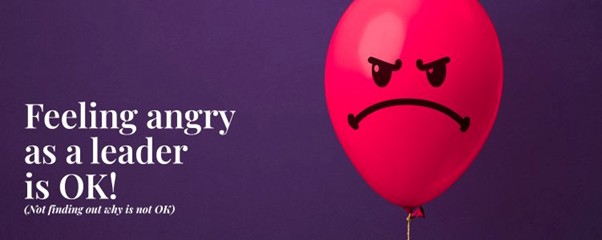
Anger is undesirable in every philosophical school, from Indian traditions to Stoicism. All our lives we are told good people don’t get angry, learn how to manage anger, managing anger is not a bad thing, it makes for generally decent behavior.
In this piece we will consider a different take on anger, influenced by Carl Jung’s premise on anger, according to him anger is not a negative emotion it’s a signal from our unconscious self.
As leaders we are expected to never be angry, we have seen enough about angry leaders is equal to bad leaders. But it is practically impossible for leaders to lead without experiencing anger, so we are trained to mask it and many of us mask it very well through our calm countenance or unflappable natures. This is good for the moment, where you don’t disrupt your teams and workplace with outbursts or shouting matches.
Suppressing anger, we feel as leaders comes with a cost, a missed opportunity. Unresolved, it remains with you and stands in your way of becoming a better leader and even more importantly building a better team.
Jungian literature suggests that we integrate ‘anger’ into our conscious awareness and actively manage it and never ignore or suppress. Outbursts and Rage Room visits are not recommendations we find in Jung’s work, instead we find four possible approaches, his work doesn’t present it as an anger management tool but more as a self-administered practice.
First, when you are angry ask yourself.
“What part of your suppressed self is trying to emerge?”
and/or
“What kind of vulnerability are we feeling?
Second,
It advises that we stop projecting our anger on an outside entity, people, things or situations, because it’s a reflection of a vulnerability we are feeling. Projection is mostly a coping mechanism.
Third,
Anger is usually accompanied by strong emotions like, shame, envy or rage, don’t runaway, acknowledge and manage it. While Jung’s work doesn’t explicitly suggest how to manage anger, the Stoic principle of ‘the best cure for anger is, delay’ works very well. Take a pause and consciously and not respond, the famous count to 100 method maybe.
Fourth,
A dialogue with yourself is another interesting suggestion we see in Jung’s work. Journalling the anger events is something that can help us understand our angry selves better.
In summary what Jungian literature suggests is, that we acknowledge anger, understand it, study and then respond to it. It talks of anger management not as ‘response management’ but a more foundational change to the way you feel. When a leader understands and manages anger it has two advantages, it makes leaders better as anger exposes their vulnerabilities and when they manage those they become better leaders and they attract and retain more effective teams.
Anger is not all evil, as leaders don’t train yourselves to not be angry, instead train to understand and manage anger. As a leader feeling angry is ok, it’s natural, but ignoring that feeling is what can be damaging.
Author Name : Sujith Sudhakaran
About the Author : Curious about the, why behind how people behave, transitioning from focusing on people only as consumers to people as people.
Program Attended : ACC+PCC
Reason for taking this program: Coaching is an opportunity to work with people and be able to help make a little difference maybe. It also allows me expand the horizon of my interest in human behaviour.
What worked for you : The way the program is structured around concepts and peer conversations, the un-classroom like environment is very engaging
What Benefits you got : Three things, clarity on what I want to do in the world of coaching, a structure to put that together, and a peer group to lean on to.