Coaching always had a very romanticised meaning in my life. I imagined myself leading a team to a gold medal (metaphorically, in corporate coaching), looking at them with moist eyes as they lifted a trophy and, of course, a victory parade on the shoulders of my coachees. Not exactly how it plays out in corporate or life coaching, but you get the drift.
All that changed when I started my ACC certification.
My eyes opened fast. 80/20 meant I had to listen for 80% of the time? I wasn’t sure I’d heard it right. I thought the coachee was supposed to listen to me (a la Shah Rukh Khan’s “Yeh 70 minute…” monologue). We had to help the coachee reach their conclusion, not gently push them towards ours? I honestly wondered if I had signed up for the right course.
Then the first peer-to-peer coaching session happened.
It was surreal. Almost an out-of-body experience. It felt like someone else was talking through me and I was just observing. While the coach listened, I started addressing my own demons. By the end of the 25 minutes, I felt I had actually slayed a few. I couldn’t believe it. It was magical.
The trend continued. In every subsequent session, I heard myself, and then I found myself. The pretence dropped, the hurt mellowed, and the ugly head of ego became clearly visible. And that’s when it hit me: I would never have believed anyone else saying the things I uncovered in those conversations. The magic of coaching suddenly came alive. It felt like I was coaching myself, while someone quietly held the space and guided the process.
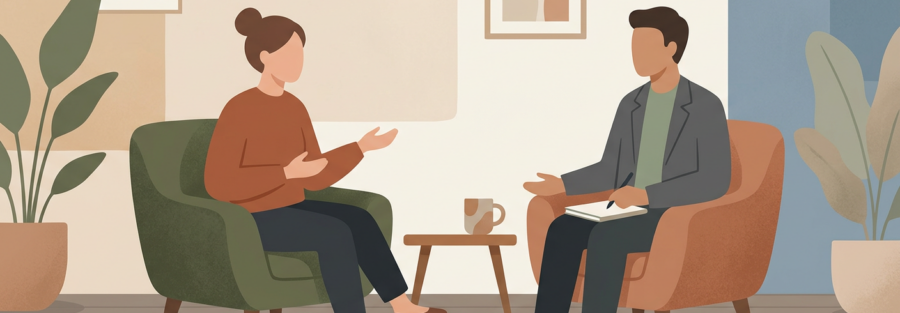
I have realised that coaching is not about instructing, mentoring, solving, or even teaching. It is about creating a safe, almost impregnable space where the rest of the world ceases to exist for those few minutes. If anything, it is about holding hands—figuratively—while the coachee rides the roller coaster of their own thoughts and beliefs.
I call it a roller coaster because I have seen myself, and others, start by resisting any questioning of our assumptions, and then slowly, almost unwillingly and unwittingly, begin to examine them. Eventually, we arrive at conclusions we didn’t even know we wanted to reach. The answers are usually already there. They are just clouded by doubts, biases, and old ideas.
As a coach, this has been humbling.
When people let you into their inner world, it is a privilege. Most coachees I have met did not want to put too much “at stake” in the beginning, but their defences slowly
disappeared as the conversation progressed. Being heard is perhaps the most underrated human need. To listen—and to listen without judgement—is a superpower a coach must cultivate.
The transformation that coaching brings changes something in both the coach and the coachee. Whether you are coaching or being coached, you are learning—not about others, but about yourself. You grow, slowly but surely.
My journey from sceptic to believer has only just begun. I am hoping to live up to the promise that coaching holds. For now, a little hand-holding will certainly help.
Author Name: